9Marks Weekender at Capitol Hill Baptist Church
Last weekend I had the opportunity to visit Capitol Hill Baptist Church for a 9Marks Weekender. The Weekender is designed for church leaders to interact/engage with the staff and elders of CHBC, and to be educated on the central aspects of healthy churches. One hundred and twenty-five leaders from all over the world met for seminars on bible doctrine, eldership, church discipline, bible education, worship, and the like. We got to witness how the elders of CHBC care for their membership and pray for one another, and to see how every part of a worship service is planned. Then we had the privilege of worshiping together during a Sunday morning service, and a prayer meeting for the evening service.
I really enjoyed the weekend (even though it snowed!) and I would recommend it to anyone serving as a pastor or lay leader, regardless of if you’re a reformed baptist or not. The weekend was instructive and beneficial, both for my own ecclesiology and for my spiritual good, the application of iron sharpening iron. I also have renewed respect and admiration for Mark Dever, one of a few pastors in the country whom God has given tremendous influence, but who has committed himself to pastoring in one place for the rest of his life, and to energizing churches to think carefully about membership and doctrine through the work of 9Marks.
Even the weekend was full and eventful, and even though I learned a great deal, my time away only reinforced my love for the church where I serve, Founders Baptist Church in Houston. I loved attending CHBC’s Sunday services, but I missed my own church service and church family. I’ve been extremely blessed to get to serve at a place like Founders, and to have the opportunity each week to lead them in congregational praise as their Pastor for Worship, as well as working administratively with the church staff. Founders is unique. Under the leadership of Pastor Richard Caldwell, the church holds firmly to the doctrines of grace, to elders as the shepherding authority, to complementarianism, and to baptist polity. Each week Founders sees between 500–600 believers gathering to worship the triune God, as we read the bible, preach the bible, pray the bible, sing the bible, and see the bible—for his glory and for our good. And all of this takes place in an area of the country that is a cesspool for false prosperity preachers like Joel Osteen, Paula White, and T.D. Jakes.
So, sure, I learned quite a bit from the 9Marks Weekender, some of which I will try to implement within my sphere of influence at Founders. But more than anything, I felt deep thankfulness and gratitude to the brothers and sisters in Christ with whom I have the privilege of serving with everyday in Houston, Texas.
R.C. Sproul on Creationism and the Age of the Universe
A friend sent me this video today (below), in which R.C. Sproul makes the point that having a high view of God’s revelation—both natural and special revelation—means that we can learn from non-believing scientists who are studying natural revelation. He illustrates this by pointing to the Copernican Revolution. Both Calvin and Luther rejected Copernicus as a heretic because of his argument that the earth is not the center of the solar system but revolves around the sun, which they said was contradictory to scripture. In this case the scientist was right and the biblical interpreter was wrong, and thus the church had to admit that they misinterpreted their understanding of scripture with respect to the solar system and reevaluate those texts which pertain to the topic. Sproul says that Christians will get a better sense of the truth from studying natural revelation than we do by ignoring natural revelation. However, if something can be shown to be definitively taught in the Bible (without question) that contradicts another theory that is based solely on natural revelation, then we must stand with the word of God. We can be shown to be a mistaken interpreter of the word of God, to be sure, but we don’t have to face that problem if we believe that both spheres are spheres of God’s revelation and that those spheres are compatible. All truth is God’s truth. If there is conflict, then somebody has to be wrong. But Sproul states that he doesn’t leap to the conclusion that it has to be the scientist because it may be the theologian who is wrong. It also may be that it is the scientist who is wrong and the theologian who is right. There are both fallible human beings interpreting natural revelation and fallible human beings interpreting infallible special revelation.
Helpful apps for writers
I like to test new iOS apps for writing. The ones below are not “writing apps” per se, but tools for writing. If you want a comprehensive look at all the known iOS text editors for iPhone and iPad and the feature set of each, check out Brett Terpstra’s iTextEditor roundup. It’s very helpful for nailing down the exact features you’re looking for if you plan to do a lot of writing or blogging on your iPad.
Terminology
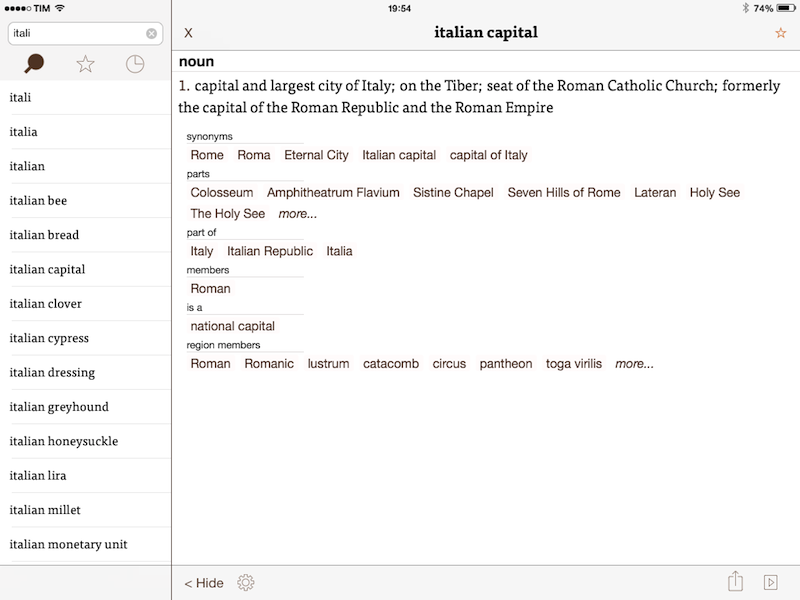
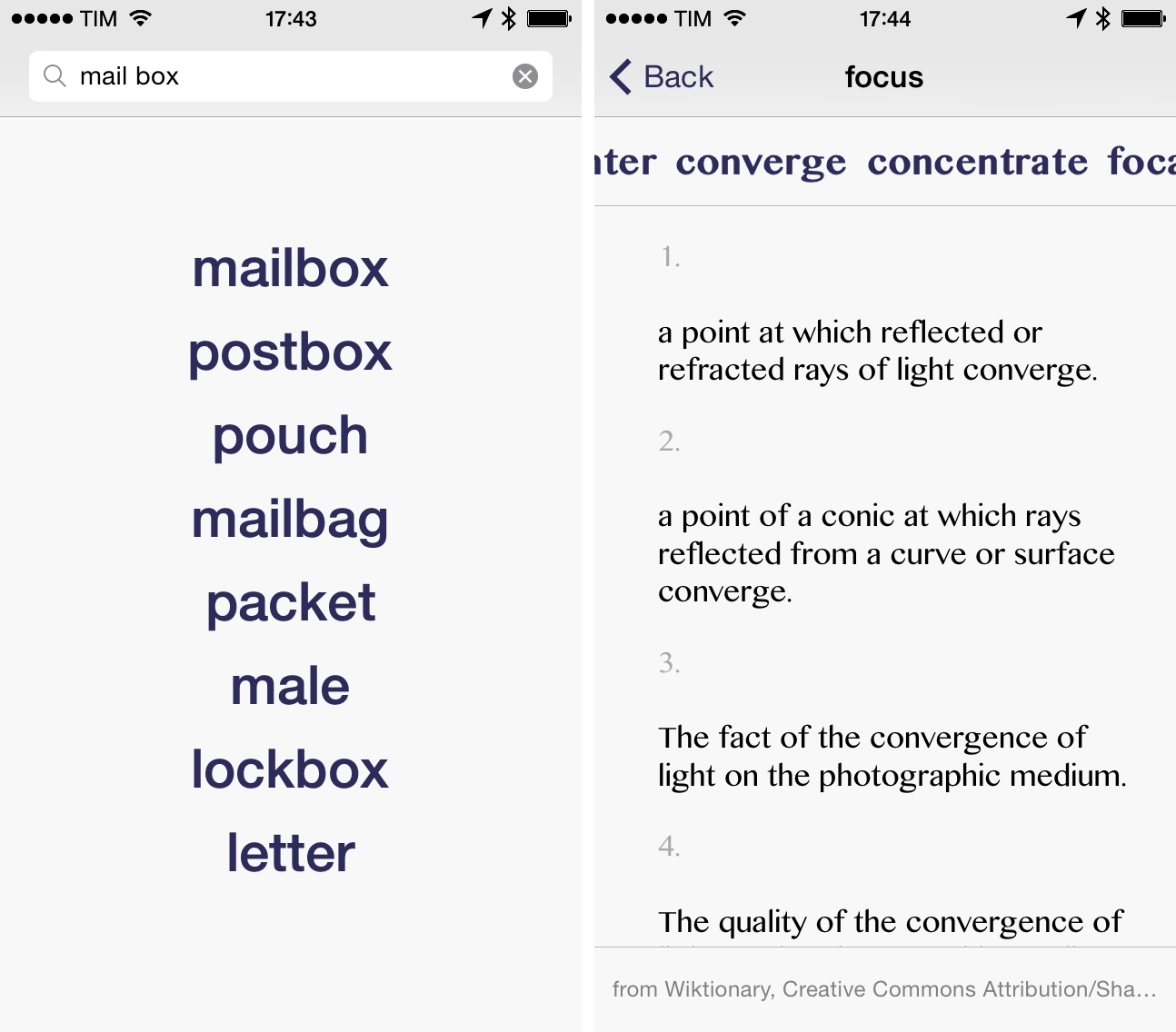
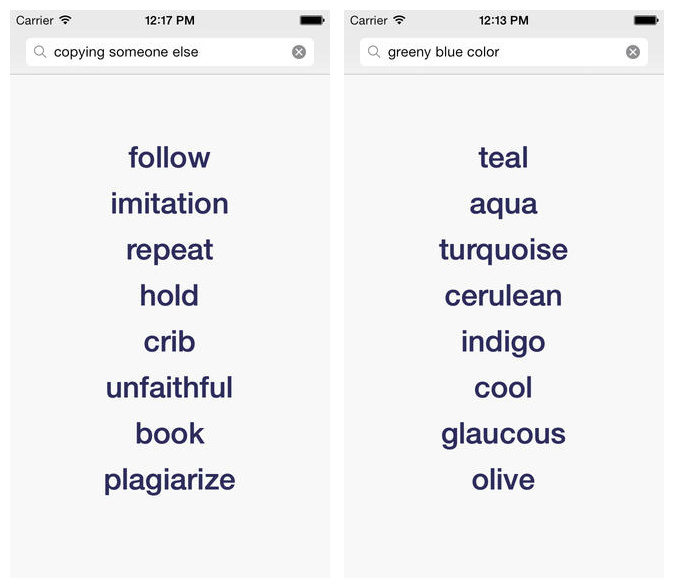
Terminology is the primary app that I use as my dictionary/thesaurus. The app’s core feature, “search,” is available through a button in the lower left corner of the app in the bottom toolbar. If you hit the button, a search field comes up showing the iOS keyboard, ready for you to search any word of phrase. In the recent edition of the app (v. 3), the search menu appears upon opening the app, which is a handy feature. Terminology also syncs between devices, so all of your saved words will appears on any iOS device that you own as long as the app is installed. The app also has a bunch of call-back actions for the advanced user, but I keep it on my home screen primarily for quick access to definitions or for word suggestions. Terminology is available in the App Store for $2.99.

WriteRight
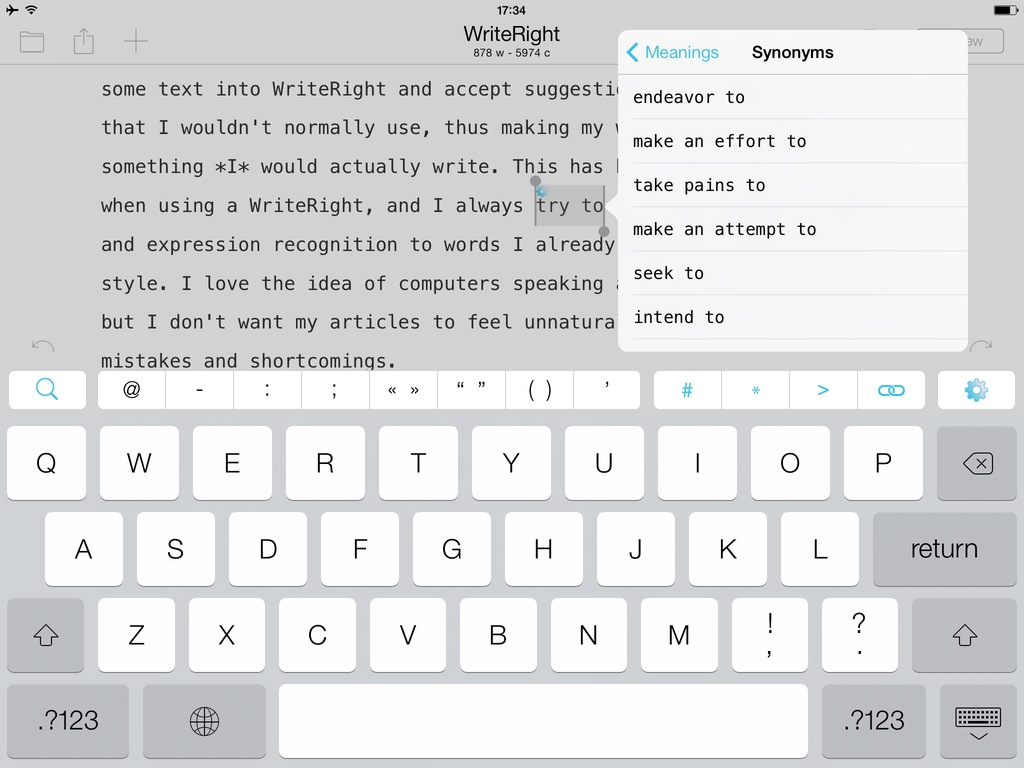
WriteRight is actually a text editor, but it offers enhanced features for synonyms, antonyms, and phraseology via a pop-up menu. You only have to select a word and an endless list of synonyms and related phrases will be displayed. Its powerful grammatical engine “recognizes conjugated words, either feminine or plural, suggests synonyms and then replaces those words with their conjugated synonym counterparts, matching gender and number, person and tense.” It’s $2.99 in the App Store.
Phraseology
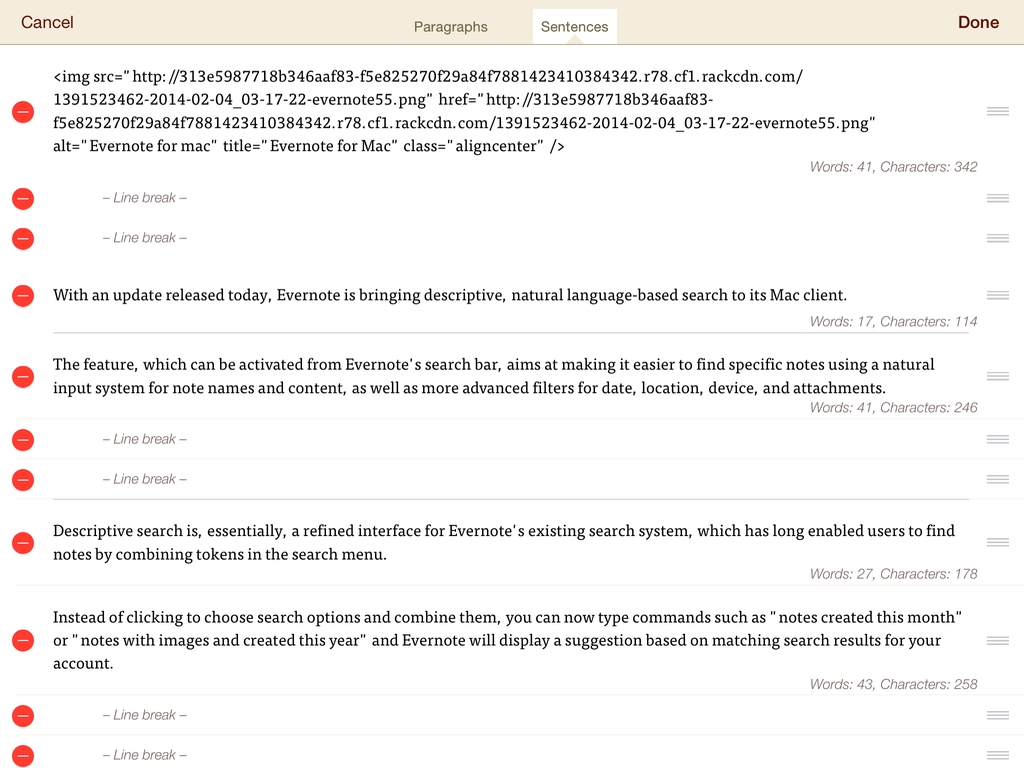
Phraseology was created by the same guy who made Drafts, a great app for taking short notes and exporting them to your notebook of choice (like Evernote or Byword). Phraseology can be a text editor if you like, but its primary function is to help you improve on what you’ve already written. The app can give you a bunch of statistics about your project, like your word count or how many characters you’ve used, but it really shines in creatively displaying your word usage and the parts of speech that occur frequently in your project. The apps calls this “speech syntax highlighting,” in which Phraseology highlights the following elements of speech in big bright colors: Nouns; Verbs; Adjectives; Adverbs; Pronouns; Determiners; Prepositions; Conjunctions. The image below shows what this looks like. It also lets you know how easy it is to read your writing and the grade level. The app is $2.99 in the App Store.

Wordbook
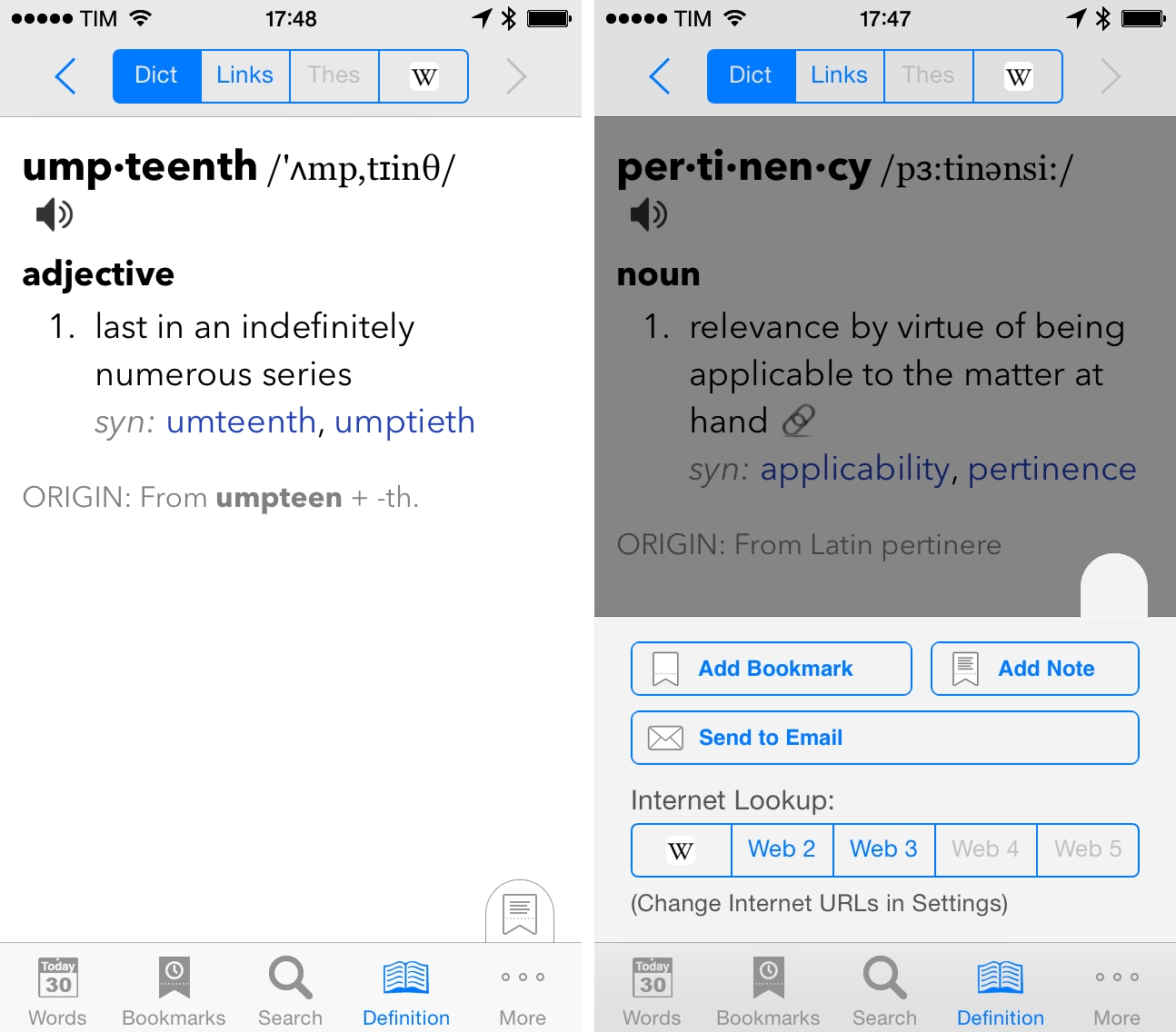
Wordbook is a standard dictionary app that has all the relative features like definitions, synonyms, antonyms, etc., but also allows for user notes. So if you want to write word or phrase associations with certain words or phrases, this app allows for that. When I started the PhD program at SBTS, I used to keep a Word document of word associations that are relevant to biblical studies (to avoid redundancy, mainly), and this app would be useful to that end. If you’re into etymologies, Wordbook also has an extensive library of root word origins. It’s $2.99 in the App Store.
Writing Aid
Writing Aid combines word definitions with meanings and synonyms. It also handles expressions nicely, and suggests alternatives for phrases and idiomatic sayings. It’s only $0.99 in the App Store.
Alison Krauss sings “Carolina in My Mind” by James Taylor
I’ve had this video saved on my YouTube account for years. Alison Krauss’ voice is so effortlessly beautiful, and I love that she’s accompanied by Jerry Douglas on the dobro. Such a memorable song, too, originally by James Taylor.
Peter Leithart on Political Symbolism / “Who Wears the Crown?”
Peter Leithart has an excellent piece over at the Canon and Culture blog on political symoblism.
American Christians are often dismissive of symbolism in politics. We’re interested in substance, by which we mean the nuts and bolts of policy, law, political principle, message and governance. We’re tempted to dismiss political symbolism as an unfortunate feature of our media-saturated age, when people are too distracted by their ubiquitous glimmering screens to pay much mind to gritty and unglossy realities.
This perspective is deeply unhistorical. Politics always has been infused with symbols. Punishment is as substantial a political act as you can find, as Michel Foucault noted, until the eighteenth-century public executions were forms of drama as much as deterrents. Ancient Romans crucified rebellious slaves, saying in effect, “You want everyone to look up to you. We can arrange that.” Later Romans flayed Christians alive, poured salt and oil in their wounds and burned them at the stake, in a quasi-sacrificial procedure. Christians refused to sacrifice to the emperor and claimed to be “living sacrifices” to Christ, so the Romans designed executions of Christians to parody Christian beliefs.
Rule by spectacle is an ancient practice. Caesars projected power with monuments, temples and coliseums. It wasn’t enough to win a battle—the victory had to be followed by the propaganda of a triumphal procession. When a king died in medieval France, his corpse sat on the throne, was served meals, and processed through the streets of Paris in full regalia until a successor was crowned. The macabre drama portrayed a basic principle of Christendom’s politics: Like Christ, the king is divine and human, human by birth and divine by anointing. Individual kings die, but “kingship” never dies.
He then connects the importance of political symoblism to the recent discussion of gay marraige in the United States and the ramifications for Christians. Ultimately, Leithart says, “the martyrs will wear the crowns”:
American Christians aren’t in immediate danger of being killed for their faith, but we will face pressures soon enough. After the Supreme Court’s Windsor decision, gay marriage is effectively the law of the land. No state limitations on gay marriage will stand up in court. The federal government aims to redefine human sexuality by fiat, an act of arrogance rivaled only by the most extreme totalitarian regimes.
Anyone who witnesses against this tyranny risks paying a heavy price. Speak out against sodomy, and you’ll lose your cooking show and never be a reality star on A&E. You’ll risk being labeled a bigot and having your reputation and life shredded. The GOP will buckle; if you pay close attention, you can hear it buckling as you read. Pastors and other Christian leaders will be tempted to hedge and accommodate to the new sexual orthodoxy. Christians who hold to biblical sexual standards will be mighty lonely.
But faithful witnesses will speak, and they will speak knowing that lasting political effects go to those who are willing to sacrifice reputation and stature and even their lives to tell the truth to and about power. Ultimately, the martyrs will wear the crowns.
Selfie-Deception
Over at the Gospel Coalition Worship blog I have a post on “selfie-deception.” I try to point out that selfies (the Instagram kind) can be a form of self-worship, and that a way forward would be to focus on texts that emphasize the “face” of God, like Exodus 34 and Numbers 6. Here is an excerpt:
These are only a few of the many verses in the Bible that speak about the glory of God’s face and its impact on his people. But this should be what we desire. It should be our earnest hope for our congregations as we lead them, when we pray for them, and when we care for them. And it should shatter our self-interest and our selfie-deception.
Indeed, it’s the natural result of focusing on God. Considering his work, his power, his sovereign will, and his grace to us in Christ naturally leads to rejecting the sort of self- expression that so sinfully pervades our culture, because in doing so we reject one glory (the glory of our faces) in favor of a far greater glory (the glory of God).
So with these texts in mind, is it too much to ask that we refocus ourselves and our selfies, to rethink how we think about our faces? Instead of dispersing our faces among so many selfie-factories, perhaps we should focus on a single point, or rather, a single person—the face of Jesus Christ. Selfies say, “I’m here! I’m important! I matter!” God says that he is what matters, and the only image that should concern us is the one in whom rests the image of the invisible God. God says that we should dwell on the light of his face, which, as Paul states, is so clearly seen “in the face of Jesus Christ” (2 Cor 4:6). We want glory. We desire it. We want the light on our faces. But in Christ alone is the “light of the knowledge of the glory of God.” (#nofilter)
Read the whole thing here.
Article in the NY Times on Transracial Adoption
Russell Moore has a nice piece in the New York Times this morning on the ethics of transracial adoption:
Right now there are untold numbers of children tied up in the foster care system, or languishing in orphanages and group homes all over the world. There is no place for racist bigotry or identity politics in solving this crisis. What matters is the welfare of children who need a Mom and a Dad.
Can any of us honestly suggest that it would be better for a child to remain in this bureaucratic limbo than to be a son or daughter to loving parents whose skin is paler or darker than his or her own?
Read the rest here.
Discernment with Movies
Trevin Wax (here, here, and here) and Alissa Wilkinson (here and here) have been debating the portrayal of worldliness in movies, and whether or not Christians should see them. The discussion began after Wilkinson wrote a review of The Wolf of Wall Street for Christianity Today, a new film by Martin Scorsese which depicts the lavish and immoral lifestyle of a financial tycoon. Wilkinson advises caution for viewers who see the movie. Wax wonders if Christians should see it at all. I agree with Wax, and rather than engaging in the full discussion I want to post a few additional thoughts.
Doug Wilson chimed in yesterday with a comment that hits close to home. He didn’t say whether or not Christians should see certain movies that depict immortality and sin in its grossest sense. Rather, he pointed out that when viewing such movies—movies intended to show the reality of the world, the good and the bad—we should keep in mind that actors are portraying characters who are immoral, and that the actors are not necessarily immoral themselves. He illustrates this point with death scenes. If an actor shoots a gun at another actor, neither of them die in real life, and thus we should keep in mind that the murderer isn’t necessarily sinning. It’s not real. But if, on the other hand, an actor takes off their clothes in a sex scene (which is apparently frequent and explicit in The Wolf of Wall Street), that actor is actually getting naked on camera, and displaying their body for millions of viewers to see. The ramifications of these actions are harrowing, to be sure. The actor, whose body belongs to their husband or wife if they are married and should be viewed by them alone, is committing to a much different method of acting than, say, the murderer who fake-shoots a man on film. The nude actor is actually committing sins which the Bible expressly forbids, whether they are married or not, acting or not.
This brings to mind some questions that I had to sort through in high school and college when I participated in musicals and plays. Would I be willing to do and say certain things on a stage that are clearly forbidden in scripture? Obviously, sexual acts were completely out of the question. Bear in mind that I went to a Christian college and did not have the same sort of pressure that others had at secular schools. I know some Christians who went to inner-city arts schools to be a theatre majors and the like, and for many of those schools, “anything goes” is the modus operandi on stage! Just read the summaries of plays like Metamorphosis and Equus and you will know what I mean.
I basically came to the same position that Doug Wilson articulates in his blog post. If the script called for me to commit a sin by way of acting, I would refrain from doing it. For me, this included primarily explicit dialogue. It’s one thing for the dialogue to be real-world and to portray a shady character in the most realistic sense. It’s quite another for me as a Christian to be the one speaking that dialogue every weekend that the particular show is running. I would be actually saying words that are offensive, both to my character and to God.
Similarly, for an actor to play the character of a prostitute and tell the story of a prostitute in an explicit way—i.e., in which the actor would be committing sexual acts on camera or on stage—is expressly forbidden because the actor is actually being sexual in their acting (if that is what the script calls for). This is why Hollywood actors never have successful marriages. No matter now much they try to convince themselves that they are just acting, the act of sex is still taking place, and adultery is in full force if one or both of the actors are married.
Up to this point I’ve only dealt with this question from the actor’s point of view, and I’m no longer an actor. The question that Wax, Wilkinson, and Wilson are asking is whether or not Christians should view these types of movies. I’m still sorting through that question, although from Wilkinson’s review it seems clear to me that I shouldn’t go see The Wolf of Wall Street, even if my desire might be in engaging the culture at large and the questions/answers posed in that film. I think this should be a clear choice for Christians (based on the film’s review), and I agree with Trevin when he says, “At what point does our cultural engagement become just a sophisticated way of being worldly?” Discernment is key, and for those who are biblically and theologically minded, we should let our conscience guide us. Food sacrificed to idols may be sin for some, but not for others (1 Corinthians 8).
For other movies the question is much harder. Is it possible to depict the horrors of the holocaust without nudity (e.g. Schindler’s List)? A major historical issue like the holocaust is probably why network TV was willing to do away with their normal censorship requirements and show that entire unedited film during the primetime slot when it was released on video. I remember this well because my parents allowed their kids (most of us teenagers) to see the movie at that time. It was that important. It’s a difficult question, to be sure, and one worth pondering.
Luther on the Value of Singing the Psalms
From Ray Van Neste:
Looking back through the excellent volume, What Luther Says (an excellent resource!), I came across this passage where Luther extols the value of singing the Psalms. I have discussed previously Luther’s love of the Psalms. Here succinctly he mentions the comfort they give, how they “preach the Messiah,” and the added impact of singing them (as opposed to only reading them).
“In view of their spiritual meaning the psalms are really lovely and sweet; for they are comforting to all depressed, wretched consciences, who are in fear of sin, the anguish and agony of death, and all sorts of trouble and misery. To such hearts the book of Psalms is a sweet, comforting, lovely song, because it sings and preaches the Messiah, although one merely reads or recites the words without notes. Nevertheless, the use of notes or music, as a wonderful creation and gift of God, helps greatly to produce this effect, especially when the people sing along and do so with fine devoutness.” (#3098)
Why would we deprive ourselves of such a resource? As Bonhoeffer wrote, “Whenever the Psalter is abandoned, an incomparable treasure vanishes from the Christian church. With its recovery will come unsuspected power.”
Get Ray’s book on Psalm singing here.
Nobody Does Not Worship
Tim Keller shares this illustration in his new book, Encounters with Jesus: Unexpected Answers to Life’s Biggest Questions (Dutton; 2013), 28–30:
Everybody has got to live for something, but Jesus is arguing that, if he is not that thing, it will fail you.
First, it will enslave you. Whatever that thing is, you will tell yourself that you have to have it or there is no tomorrow. That means that if anything threatens it, you will become inordinately scared; if anyone blocks it, you will become inordinately angry; and if you fail to achieve it, you will never be able to forgive yourself.
But second, if you do achieve it, it will fail to deliver the fulfillment you expected.
Let me give you an eloquent contemporary expression of what Jesus is saying. Nobody put this better than the American writer and intellectual David Foster Wallace. He got to the top of his profession. He was an award-winning, best-selling postmodern novelist known around the world for his fierce and boundary-pushing storytelling. He once wrote a sentence that was more than a thousand words long. And, tragically, he committed suicide. But a few years before that, he gave a now-famous commencement speech at Kenyon College. He said to the graduating class,
Everybody worships. The only choice we get is what to worship. And the compelling reason for maybe choosing some sort of god … to worship … is that pretty much anything else you worship will eat you alive. If you worship money and things, if they are where you tap real meaning in life, then you will never have enough, never feel you have enough. It’s the truth. Worship your own body and beauty and sexual allure, and you will always feel ugly. And when time and age start showing, you will die a million deaths before [your loved ones] finally plant you… . Worship power, and you will end up feeling weak and afraid, and you will need ever more power over others to numb you to your own fear. Worship your intellect, being seen as smart, you will end up feeling stupid, a fraud, always on the verge of being found out. Look, the insidious thing about these forms of worship is not that they are evil or sinful; it is that they’re unconscious. They are default settings.
Wallace was by no means a religious person, but he understood that everyone worships, everyone trusts in something for their salvation, everyone bases their lives on something that requires faith. A couple of years after giving that speech, Wallace killed himself. And this non-religious man’s parting words to us are pretty terrifying: “Something will eat you alive.”
Because even though you might never call it worship, you can be absolutely sure you are worshiping and you are seeking. And Jesus says, unless you’re worshiping me, unless I’m the center of your life, unless you’re trying to get your spiritual thirst quenched through me and not through these other things, unless you see that the solution must come inside rather than just pass by outside, then whatever you worship will abandon you in the end.
(HT: Tony Reinke)

 Josh Philpot